


- Street “Pjeter Bogdani”
- N. 13, H. 10, Ap. 15 Tirana, Albania
- Send Mail
- info@shukalb.al
- Make Call
- Tel: (+355/4) 2245 101

From Wastewater Sludge to a Potential Agricultural Resource: Scientific Evidence from Korça WWTP, Albania
From Wastewater Sludge to a Potential Agricultural Resource: Scientific Evidence from Korça WWTP, Albania
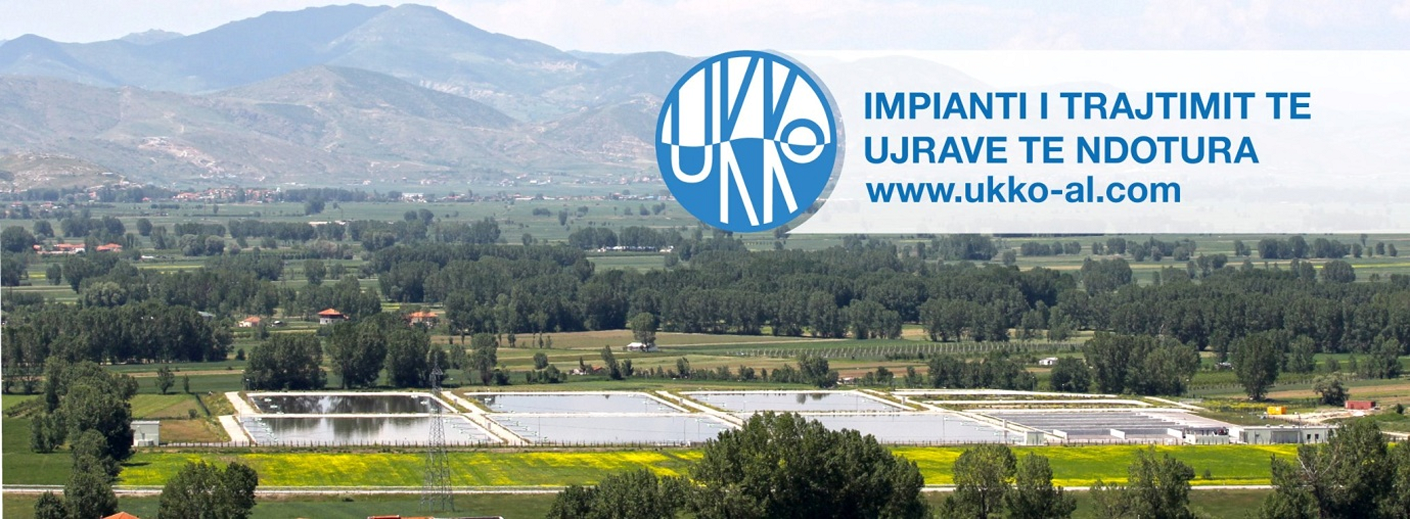 A recently published scientific study in Environment and Ecology Research, published by Horizon Research Publishing, USA, presents important findings on the potential for the controlled and risk-based reuse of wastewater treatment sludge in agriculture in Albania. The study, “Sewage Sludge Reuse in Agriculture: Trace Metal Dynamics, Bioavailability, and Policy Implications in Albania,” brings together the expertise of the Korça Regional Water Supply and Sewerage Company, through the Korça Wastewater Treatment Plant (WWTP), and the Department of Environmental Engineering at the Polytechnic University of Tirana, together with researchers from the University of Tirana and the Budapest University of Technology and Economics.
A particularly important contribution was made by Eng. Aleks Andoni, who leads the Korça Wastewater Treatment Plant (WWTP) within the Korça Regional Water Supply and Sewerage Company. His contribution reflects the essential role of experienced water utility professionals in generating, preserving and translating long-term operational knowledge into applied research. Through his technical involvement and the provision of valuable operational experience and long-term monitoring data from the Korça WWTP, Eng. Andoni helped strengthen the practical relevance of the study and its potential to contribute to improved sludge management practices and evidence-based policy development in Albania. His involvement also demonstrates how close collaboration between water utilities and academic institutions can transform years of operational experience and field-based knowledge into scientifically grounded evidence with wider value for the water and environmental sector.
A 14-year perspective from Korça
The study is based on a 14-year monitoring period covering 2010–2024 from the Korça WWTP. Researchers analyzed sludge quality, with particular attention to heavy metals such as zinc, copper, nickel, cadmium, mercury and lead. They also examined agricultural soils where treated sludge was applied, assessing not only total metal concentrations but also the fraction available for plant uptake.
The results are encouraging. Throughout the monitoring period, heavy-metal concentrations in the Korça WWTP sludge remained within the applicable limits under Albanian legislation and the regulatory benchmarks considered in the study for agricultural use. At the same time, the study identified trends requiring continued attention, particularly the increase in zinc after 2019 and a rise in mercury in 2024, although both remained well below the applicable regulatory limits.
Importantly, compliance with concentration limits does not, by itself, demonstrate that agricultural reuse is environmentally safe under all conditions. Safe reuse also depends on factors such as soil characteristics, application rates, cumulative loading, metal mobility, plant uptake and long-term monitoring.
Looking beyond total concentrations
One of the study’s most significant findings is that total heavy-metal concentrations alone do not necessarily provide a complete picture of environmental risk.
The researchers found a substantial difference between the total amount of metals present in the soil and the fraction available for uptake by plants. For example, total nickel in the investigated soil reached 810 mg/kg, while only 5.7 mg/kg was readily available. Similarly, only a small fraction of the total zinc and copper was available to plants.
The alkaline conditions of the soil, with a pH of approximately 7.9, help limit metal mobility. However, this does not mean that metals are permanently immobilized. Changes in soil conditions, particularly a reduction in pH, could increase their availability in the future. This highlights the importance of long-term soil monitoring, appropriate application management and site-specific risk assessment.
Sludge as a resource
The research also highlights the potential agronomic value of treated sludge. The Korça sludge contains significant amounts of nitrogen, phosphorus and organic matter, with approximately 2.0–2.7% nitrogen, 1.3–2.3% P₂O₅ and 20–36% organic matter. These characteristics can contribute to soil fertility, improve soil structure and provide nutrients for agricultural production, subject to appropriate application conditions and management.
The study therefore supports the concept of sewage sludge as a potential resource within a circular economy, rather than simply a waste product. However, agricultural reuse must remain controlled, risk-based and supported by appropriate monitoring. In particular, metals such as zinc and nickel could accumulate in soils over time if application rates, cumulative loading and site conditions are not properly managed.
The challenge goes beyond sludge quality
An important conclusion of the study is that, in the Korça case, the main challenge to wider sludge reuse may lie less in current heavy-metal compliance and more in Albania’s institutional and technical capacity to manage sludge safely over the long term.
Although Albania has a regulatory framework for the agricultural use of wastewater sludge, the study identifies important gaps, including the limited availability of accredited laboratories, the absence of a national sludge quality register, and insufficient coordination between relevant institutions.
The authors recommend three key actions: incorporating bioavailability-based assessment into the regulatory framework; establishing a national sludge quality register; and developing accredited laboratory capacity in Albania for the analysis of sludge, soil and plant samples.
An example of utility–academia collaboration
Beyond its scientific findings, the study demonstrates the value of collaboration between water utilities and academic institutions. The long-term experience and monitoring data of the Korça WWTP, combined with academic and laboratory expertise, have generated evidence that can contribute to a better understanding of sludge management not only in Korça, but potentially provide a methodology for further site-specific assessments across Albania and the wider Western Balkans.
The study also considered microbiological safety. Salmonella was not detected in the later samples for which data were available, although a positive result was recorded in 2014. The authors therefore emphasize the importance of continued and more frequent microbiological monitoring, particularly during operational changes. The absence of Salmonella in later samples should be understood in the context of the available sampling data and should not, on its own, be interpreted as evidence of permanent microbiological safety.
As a case study of a single WWTP, the findings cannot be directly generalized to all sludge produced in Albania. Sludge quality and the suitability of agricultural reuse may vary depending on influent characteristics, industrial discharges, treatment processes, sludge treatment and stabilization, application rates and site-specific soil conditions. Rather, the Korça study provides a valuable evidence base and methodological approach for further assessments at other sites.
The study concludes that, under controlled conditions, with appropriate application management and effective monitoring, treated wastewater sludge has the potential to represent a valuable resource for agriculture. At the same time, Albania needs to strengthen the institutional, technical and monitoring foundations required to determine when, where and under what conditions sludge reuse can be carried out in a safe, transparent and sustainable manner.
Read the full article in English: