


- Street “Pjeter Bogdani”
- N. 13, H. 10, Ap. 15 Tirana, Albania
- Send Mail
- info@shukalb.al
- Make Call
- Tel: (+355/4) 2245 101

Diagnosis & Remedy: Automatic Control Valves
Diagnosis & Remedy: Automatic Control Valves
By Alejandro Duque. P. Eng., Senior Application Engineer – Mueller Water Products
Photo Credit: Mueller International Holdings Ltd
Despite their seemingly simple function of opening, closing, or modulating flow, automatic control valves play a critical role in pressure management, flow control, and liquid level control across diverse applications like irrigation, fire protection, and building automation. However, their placement in remote locations – underground, on rooftops, or within buildings – can make it challenging to identify potential malfunctions before they escalate into larger issues. This begs the question: how can we proactively monitor and maintain these valves to mitigate risks?
The control valves operate in areas lacking readily available power, utilizing hydraulic pilots controlled by flow, pressure, or level sensors. In these scenarios, implementing or adhering to a preventative maintenance and valve exercising program becomes crucial. This program verifies proper valve operation and ensures their ability to perform when hydraulically actuated. For valves with access to power, electronically actuated controls using solenoids, motor actuators, and control panels offer integration with SCADA systems and PLCs. This integration enhances monitoring and control of the system or zone the valve regulates, enabling proactive identification and mitigation of potential issues.
During control valve selection for a specific application, it’s crucial to understand limitations to ensure optimal performance. Generally, control valves require a minimum differential pressure of 10 psi (0.7 bar) to function effectively. If your application falls below this threshold, collaborating with a control valve manufacturer for alternative solutions is highly recommended. Furthermore, pressure drops exceeding 65% across the valve can induce cavitation, a phenomenon to be avoided whenever possible. While unavoidable in certain situations, cavitation’s destructive effects can be mitigated by using anti-cavitation trim or orifice plates. However, anti-cavitation trim should be an engineered product specific to the application for optimal control over cavitation’s damaging properties.
This document addresses frequently asked questions (FAQs) regarding control valve operation, drawing upon the expertise of Mueller Water Products’ training and applications department. These FAQs aim to provide solutions to common challenges encountered in the field.
Q: What are the locations and functions of each control valve in the system?
A: For systems with numerous automatic control valves, implementing a data management system is highly recommended. This system, whether a spreadsheet or database, should capture critical valve information like manufacturer, model, serial number, and any relevant additional details. Whenever possible, include a photograph of the installed valve. Furthermore, consider incorporating a map with corresponding numbered locations for each valve, allowing for easy cross-referencing with the data management system. Proactively compile a reference sheet listing customer service contacts for the various valve manufacturers within your system, along with designated service and supply providers for each valve. This comprehensive data management system will not only streamline the tracking of valve servicing but also facilitate the recording of additional parts installed and any adjustments made to operating conditions.
Q: What are the most important maintenance tasks for valve operators to perform and how can we streamline tasks?
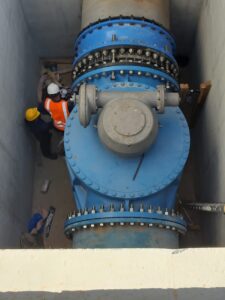
A: While control valves may share similar functional roles across diverse applications, their operating environments significantly impact potential failure modes. For instance, Valve 1, located in a remote area with high particulate levels, increased pressures, and a greater risk of tuberculation, faces a higher risk of performance degradation compared to Valve 2. Without appropriate preventative maintenance (e.g., quarterly cleaning), a blocked strainer in Valve 1 could lead to failure. For systems with readily available electrical power, local control panels or integration with SCADA systems can provide early warnings of potential issues, enabling proactive intervention. While various manufacturer products address reactive maintenance needs, a robust preventative maintenance program remains the most effective strategy to minimize system failures.
Q: Are quick reference manuals or troubleshooting guides readily available for every operator or maintenance tech?
A: Efficient control valve troubleshooting necessitates readily having both the valve schematic and Instruction and Operation Manual (IOM) on-site. Most automatic control valve manufacturers provide a comprehensive submittal package detailing all components used in the factory-assembled configuration. This submittal typically includes the IOM, which contains schematic, valve startup instructions, and troubleshooting FAQs. If the IOM is misplaced, most manufacturers maintain online libraries or offer them through customer service for easy retrieval. Should the troubleshooting issue remain unresolved after consulting the IOM and submittal documents, contacting the valve manufacturer directly is recommended for further assistance.
Q: Does the operator know how to manually override the control valve to close, open, or lock the valve and its current hydraulic position?
A: Strategic placement of isolation ball valves at the pilot system ports empowers operators to perform safe maintenance without removing the main control valve from the line. These valves offer precise control: the upstream ball valve can lock the main valve in an open position, the downstream ball valve can lock it closed, and the top cover/bonnet ball valve can secure the diaphragm in its current state. This isolation capability facilitates safe maintenance on both the main valve and pilot system. If operators lack training on these procedures, numerous manufacturers offer dedicated courses on automatic control valves to ensure proper and safe maintenance practices.
Q: Are any regular tests of the hydraulic system required?
A: Testing of control valves can be readily performed at any point during operation. Two primary methods are employed: utilizing the previously discussed pilot system isolation ball valves and implementing a gate valve exercising program. Isolation ball valves enable verification of both pilot control spring settings and mainline valve functionality.
Q: If SCADA is in use by the utility, can information be transmitted back from existing control valve locations?
A: Yes, control valves offer multiple functionalities beyond just regulating flow: they can also serve as valuable information sources. Most manufacturers provide a wide range of transmitters alongside control options, enabling the transformation of a standard hydraulic valve into a metering control valve or even a passive metering device. If sufficient differential pressure exists, a diaphragm-actuated automatic control valve can effectively regulate or measure virtually any parameter a district might require.
Note: Mueller International Holdings Ltd is a member of SHUKALB